
Why Basic Computer and Digital Literacy Matters for Underprivileged Children
Every classroom today looks radically different from the ones a generation ago. Blackboards and chalk are steadily making way for interactive displays, tablets, and online assessments. Yet, step into the peri-urban bastis, informal settlements, and low-income pockets of Uttar Pradesh, and you will see a troubling contrast. While children from affluent families navigate smartphones and laptops with effortless intuition, millions of bright young minds have never touched a keyboard or moved a mouse.
Bridging this divide is not merely an educational upgrade; it is an urgent social necessity. Expanding digital literacy for underprivileged children equips young learners with the essential skills required to stay enrolled in school, explore modern career paths, and break the cycle of generational poverty.
Through grassroots learning initiatives and community-driven smart centers, dedicated field teams are proving that when given equal digital access, every child can excel. Here is a practical look at why digital learning is critical for underserved communities, what obstacles these students encounter, and how grassroots models are delivering lasting impact on the ground.
The Reality of the Digital Divide in Semi-Urban India
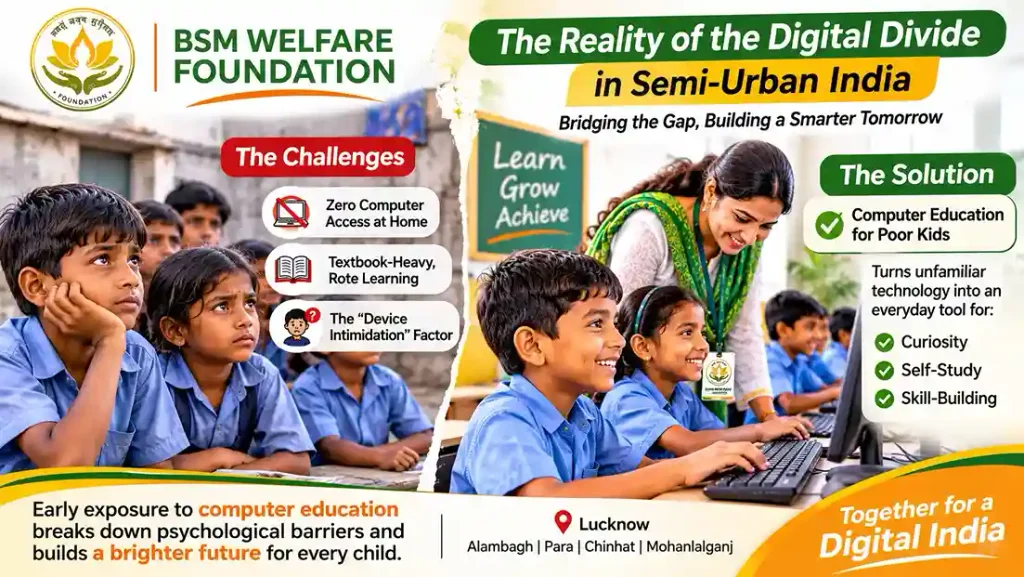
The gap between technology-enabled classrooms and underfunded grassroots schools has widened into a steep economic divide. In underserved urban settlements and peri-urban villages across Lucknow—from Alambagh and Para to the fringes of Chinhat and Mohanlalganj—children face substantial learning barriers:
- Zero Computer Access at Home: While households may possess a shared, low-cost smartphone for calling, children rarely get independent screen time for foundational learning.
- Textbook-Heavy, Rote Learning: Conventional neighborhood schools often rely on memorization, leaving students unprepared for computerized exams and real-world digital applications.
- The “Device Intimidation” Factor: Children who have never interacted with modern hardware often develop anxiety around technology, assuming digital devices are meant only for wealthy families.
Providing early exposure to computer education for poor kids breaks down this psychological hesitation. It turns a piece of unfamiliar technology into an everyday tool for curiosity, self-study, and skill-building.
4 Reasons Why Foundational Tech Skills Are Vital for Young Learners
| Educational Impact Area | Concrete Benefit to the Student |
| Foundational Logic & STEM | Interactive modules simplify complex math and science concepts |
| Exam & Career Readiness | Prepares students for computerized testing and modern jobs |
| Retention & Dropout Prevention | Visual storytelling keeps children actively engaged in class |
| Self-Reliance & Confidence | Encourages independent research and problem-solving skills |
1. Conceptual Understanding Over Rote Memorization
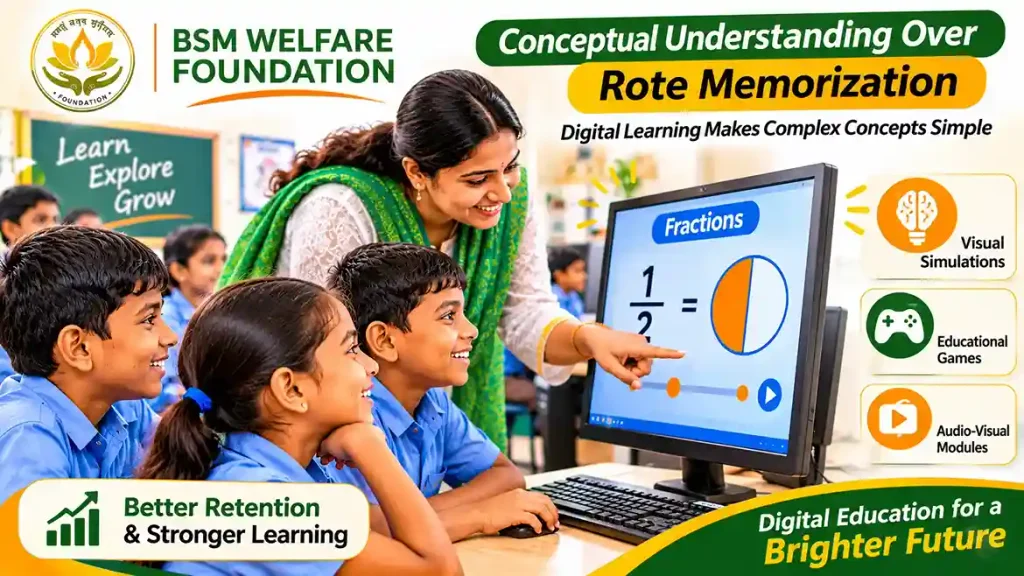
Abstract concepts in mathematics, science, and geography can be difficult to grasp through static, worn textbooks alone. When children interact with visual simulations, educational games, and audio-visual modules, their retention improves substantially. A difficult fraction problem or a science diagram suddenly makes sense when seen as an animated, interactive puzzle.
2. Readiness for Contemporary Academic Exams
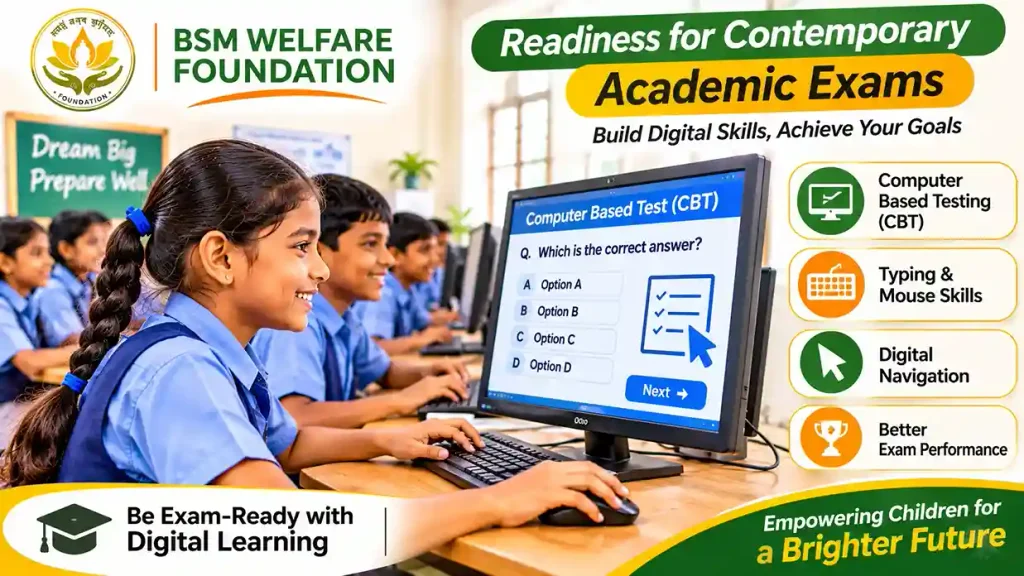
Nearly every major scholarship entrance, vocational assessment, and competitive exam in India has transitioned to computer-based testing (CBT). A student who lacks basic typing confidence, mouse dexterity, and digital navigation skills faces an immediate disadvantage, regardless of their academic potential. Early exposure ensures technology assists their ambitions rather than blocking them.
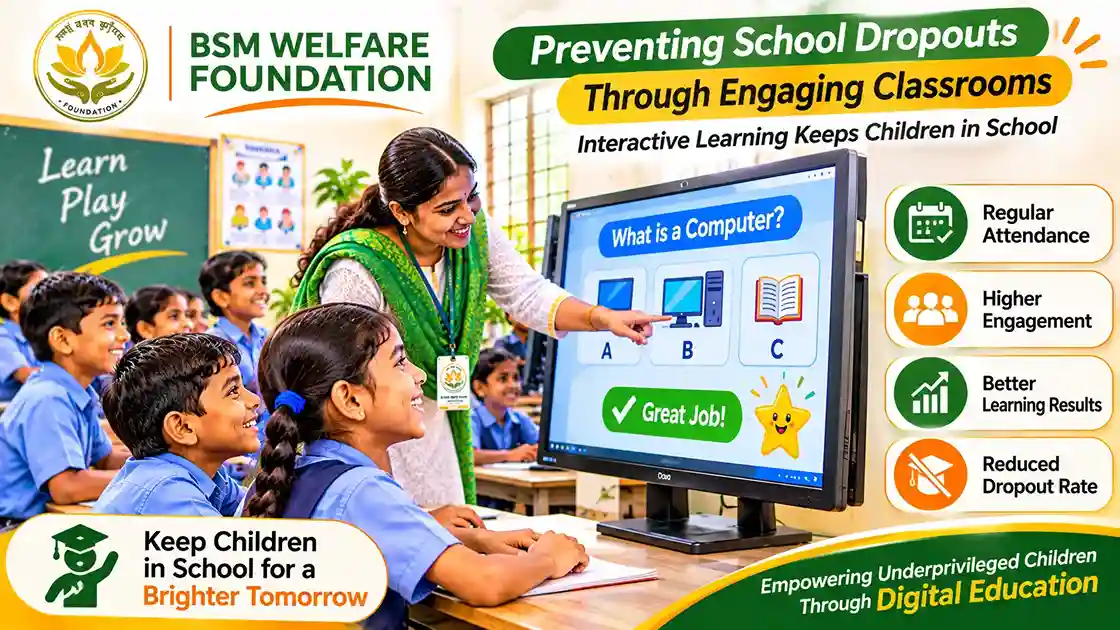
3. Preventing School Dropouts Through Engaging Classrooms
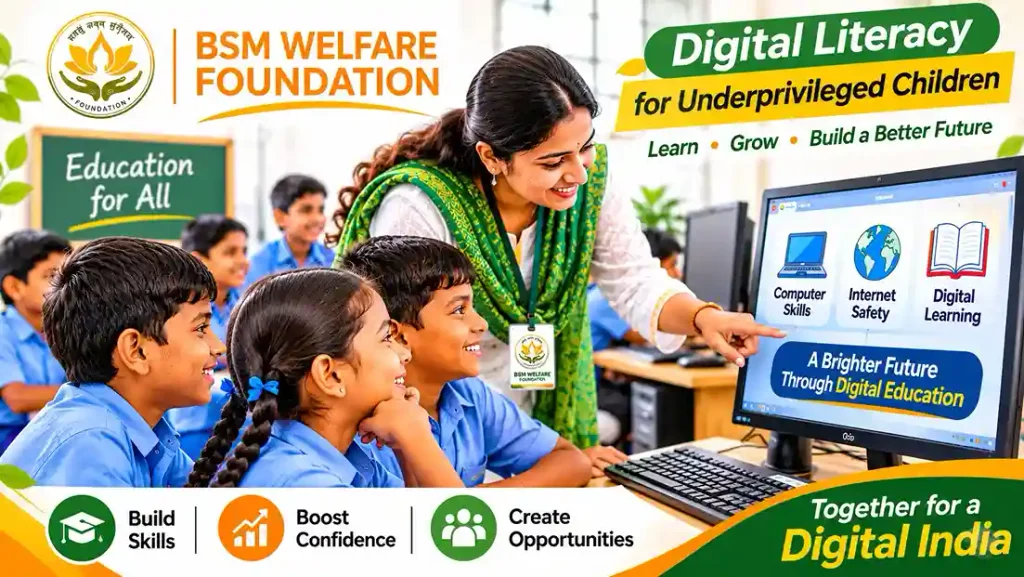
Monotonous school routines often lead to frequent absenteeism among children from low-income communities. Interactive smart displays and digital learning sessions spark genuine excitement, encouraging regular attendance and keeping children engaged in the formal learning system.
4. Direct Pathways to Modern Livelihoods
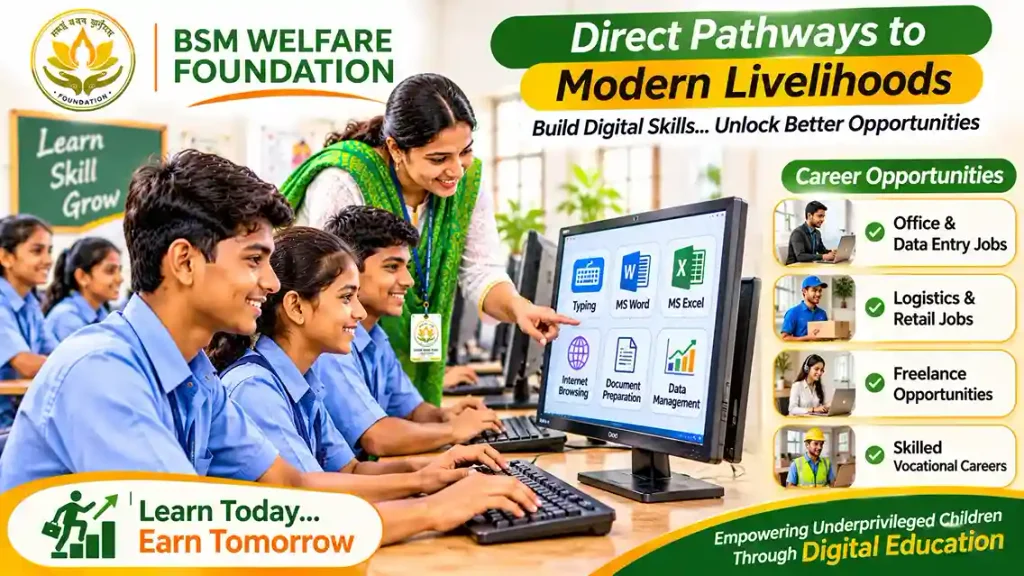
Basic computer familiarity is no longer an optional credential; it is a fundamental employment prerequisite. Teaching typing, document drafting, safe web browsing, and spreadsheet basics provides students with practical skills that can later support vocational employment, retail logistics roles, or freelance opportunities.
How Smart Classrooms Drive Real Change: The Smart Shiksha Initiative
Providing tech access requires much more than simply delivering computers to a room. Without structured curricula, trained instructors, and safe spaces, hardware quickly becomes obsolete.
To solve this challenge, non-profit initiatives have created structured, community-centered models. Under the Smart Shiksha Lucknow program driven by BSM Welfare Foundation, digital tools are integrated directly into basic education through a practical, three-step framework:
- Step 1: Device Familiarity – Basics of hardware, typing, mouse control, and computer safety.
Why Basic Computer and Digital Literacy Matters for Underprivileged Children - Step 2: Interactive Curriculum – Visual audio-visual modules for regional-board Math, Science, and English.
Why Basic Computer and Digital Literacy Matters for Underprivileged Children - Step 3: Self-Directed Exploration – Assisted web research, creative learning tools, and foundational problem-solving.
By placing high-engagement smart learning displays directly in underserved localities, this grassroots initiative removes the financial hurdles that hold children back. Operating as a registered NGO working for child education, BSM Welfare Foundation ensures that educational programs run alongside community welfare support, creating an encouraging environment where students thrive.
How Holistic Well-Being Supports Academic Success
A child cannot focus on arithmetic or screen-based problem-solving if they are chronically undernourished, unwell, or enduring intense environmental stress at home. Reliable digital learning programs succeed only when paired with holistic community welfare.
Regular preventive health screenings and community wellness drives are essential pillars of student development. In fact, pairing tech education with wellness initiatives—like organizing a free community meditation camp—helps students build the mental focus and calm needed to thrive academically.
When health checkups, mental wellness, and interactive learning work together, children build the physical stamina and emotional resilience needed to stay consistent in school.
Practical Ways Citizens and Donors Can Bridge the Gap
Democratizing technology across underserved neighborhoods requires collective community action. Here is how individuals, working professionals, and businesses can help:
- Donate Refurbished Hardware: Laptops, tablets, and desktop systems that your company or household is replacing can become a child’s very first gateway to learning.
Why Basic Computer and Digital Literacy Matters for Underprivileged Children - Volunteer Weekend Hours: Dedicate two hours every weekend to teach basic typing, conversational English, or fundamental digital tools at an educational center.
Why Basic Computer and Digital Literacy Matters for Underprivileged Children - Sponsor Learning Infrastructure: Individual contributions fund digital monitors, stable internet connections, and classroom supplies. If you wish to support this cause and optimize your taxes, read more about claiming 80G tax deductions on charitable donations before making a contribution.
Conclusion
Access to technology should never depend on a child’s economic background. When we introduce digital literacy for underprivileged children, we do far more than teach them how to use a machine—we unlock independent thinking, academic confidence, and long-term economic independence.
Through focused initiatives like Smart Shiksha, grassroots classrooms are proving that the digital divide can be bridged, one lesson at a time. However, sustaining and scaling these smart centers requires continuous community involvement. Whether by volunteering your time, mentoring young learners, or supporting a certified NGO working for child education, your contribution helps ensure that no child in Lucknow is left behind in an increasingly connected world.
Frequently Asked Questions (FAQs)
1. What does digital literacy for underprivileged children include?
It covers foundational computer skills: understanding hardware components, operating a keyboard and mouse, using basic word processors, navigating educational software, and practicing safe internet browsing.
2. Can children learn effectively without having a computer at home?
Yes. Structured community centers equipped with guided computer access provide sufficient weekly lab hours for children to build confidence, finish homework, and learn digital concepts.
3. How does computer education for poor kids prevent school dropouts?
Audio-visual lessons and interactive learning make complex subjects exciting, which increases school attendance and helps students stay enrolled in formal schooling.
4. What is the focus of Smart Shiksha Lucknow?
Smart Shiksha Lucknow is an educational initiative focused on introducing digital classrooms, interactive visual content, and foundational literacy to children living in underserved settlements across Lucknow.
5. How can I volunteer with an NGO working for child education in Lucknow?
You can connect directly with registered social foundations through their community centers or official websites to sign up as a weekend teaching mentor, technology trainer, or logistics volunteer.