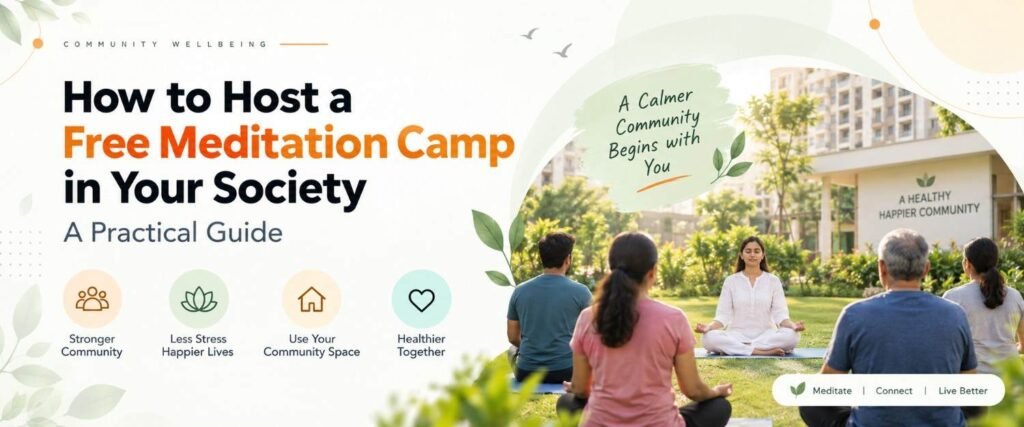
A meditation camp does not need to be a big event. Sometimes, a quiet room, a few interested residents, and the right guidance are enough to create a meaningful session. Actually, a residential society is an easy place to begin since you have a space that’s shared and a community that can be involved.
Even those who haven’t meditated before can find a properly organised session to be simple, welcoming, and comfortable.
The main question is how to put everything together. At what time should the session be held? What arrangements are really necessary? How can they be invited, and who is the right facilitator? In this guide, we will cover the essential requirements, planning process, participant involvement, and the role of an NGO in organising a meditation camp in a society.
What Happens at a Meditation Camp in Your Society?
A meditation camp provides residents an opportunity to come out of their daily stress and routine, and just experience meditation in a group and guided environment.
Actually, the session can be easily organized in a clubhouse, community hall, garden, or any quiet common space where people can sit comfortably.
A facilitator (a trained person who guides the meditation session) introduces the practice, precisely explains the basic method, and guides the participants throughout the session. Since the focus is on learning and experiencing meditation, beginners can participate without any previous knowledge or experience.
A Typical Session Includes:
Introduction: The meditation practice and session are explained.
Comfortable seating: Mats, cushions, or chairs as required by the venue.
Guided meditation: Basic instructions presented step-by-step by the facilitator.
Quiet practice: Meditation time without any distractions.
Reflection & questions: A brief discussion of experiences and doubts.
A 30 to 60-minute meditation session for a residential society is usually practical for a first camp. It is not meant to be a fancy event, but to provide residents with a real and easy experience of meditation.
Why Organize a Meditation Session for Your Residential Community?
A meditation session can bring something different to your society. It gives people a chance to slow down, meet without the usual noise, and try something they may have been meaning to explore. Here are the main reasons why it is worth considering:
- A Different Gathering
Generally, a society event focuses on celebration, entertainment, or activity. Meditation provides a more peaceful means for the community to gather without talking or competing.
- A Moment to Pause
Life doesn’t often give you time to pause or be calm. A scheduled meditation session gives residents a simple reason to step away from work, screens, responsibilities, and everyday distractions for a while.
- Easy First Step
People often want to meditate but don’t know where to start. A guided session within their own society makes that first step familiar, simple, and less intimidating.
- More Efficient Use of Space
The clubhouse or community hall can be used for more than meetings and celebrations. It can also become a peaceful space where residents learn, reflect, and spend time on their wellbeing.
- A Healthier Community
A meditation camp can be part of a larger community mental wellness initiative, which can help residents reflect on wellbeing as something they can also contribute to collectively.
- A Shared Experience
Children, adults, workers, and retired individuals can have different daily routines. Meditation gives them a simple activity they can experience together, without competition or physical demands.
What Do You Need to Organize a Free Meditation Session?
A free meditation session does not need complicated arrangements. Usually, a space, society approval, and proper guidance are sufficient. Here are some important items to consider when planning:
- A Suitable Space
A clubhouse, community hall, or quiet garden can be suitable. Choose a place where residents can sit comfortably with minimal noise.
When you have to organize meditation in a society clubhouse, take care to pick an appropriate time and space, ensuring that you have enough seats for your anticipated participants.
- Society Approval
Ensure that the management committee approves prior to announcing the session. Make sure to inform about the venue, date, and time, and rules of use of common areas.
- Simple Arrangements
Mats, cushions or chairs are usually enough. Maintain the environment in a sanitary and comfortable manner. Camps don’t need a lot of expensive equipment or decoration, which is the reason for the zero-cost option.
- NGO Collaboration
If you need professional guidance, collaborate with an NGO that conducts meditation programmes. Provide your society information, preferred date and number of people expected at the session for assistance in setting up the session.
Keep It Simple
This is all you need to get you started. The focus should be on creating a comfortable space and providing residents with the right guidance.
How to Organize a Meditation Camp in Your Society, Step by Step?
Planning a meditation camp in a society is not as complicated as it may seem. You mainly need the right place, a suitable time, some resident participation, and someone who can guide the session. Here is how you can go about it:
Step 1: Get Permission From the Society
Discuss the idea with the management committee. Prior to proceeding, discuss the purpose, date, location, and anticipated number of attendees.
Step 2: Decide When and Where to Hold It
Pick a time that suits most residents. A community hall or a quiet outdoor area can be a good place for the session, or the society’s clubhouse.
Step 3: Find and Partner With an NGO
If you do not have a meditation teacher, connect with an NGO that conducts meditation programmes. Specify the venue, date, and the number of people you expect to be there. They can assist in training and guide the session accordingly.
Step 4: Make It Easy for Beginners
Don’t assume that residents already know about meditation. Tell them that they are not alone; they are welcome beginners; tell them what to expect during the session.
Step 5: Invite Residents to Join
Share the details through the society WhatsApp group, resident app, or notice board. Be sure to stay on point in the message and include the date, time, and place of the session, as well as the length of the session.
Step 6: Conduct the Session and Get Feedback
The first session should be kept as simple as possible and be limited to just the practice. Then, ask residents if they found it. You can use their feedback to determine if you need to have another session.
Conclusion
A meditation camp can be a simple way for residents to make time for their mental wellbeing without adding another complicated activity to their lives. Even after just one session, with the right guidance, people can be inspired to explore meditation outside the camp.
BSM Welfare Foundation, through its Meditation for All initiative, can support communities that want to bring guided meditation sessions closer to residents.
It’s possible to transform an unused community area into a space for learning, reflection, and wellbeing with a simple collaboration.
Sometimes, creating a calmer community begins with simply giving people a reason to pause.
Support Our Mission
Your support brings real change in healthcare, learning, and relief where it is needed most.
Support Our Mission
Your support brings real change in healthcare, learning, and relief where it is needed most.
Be Part of the Change | Get Involved